HWID Spoofer Tested on a Hardware Banned PC
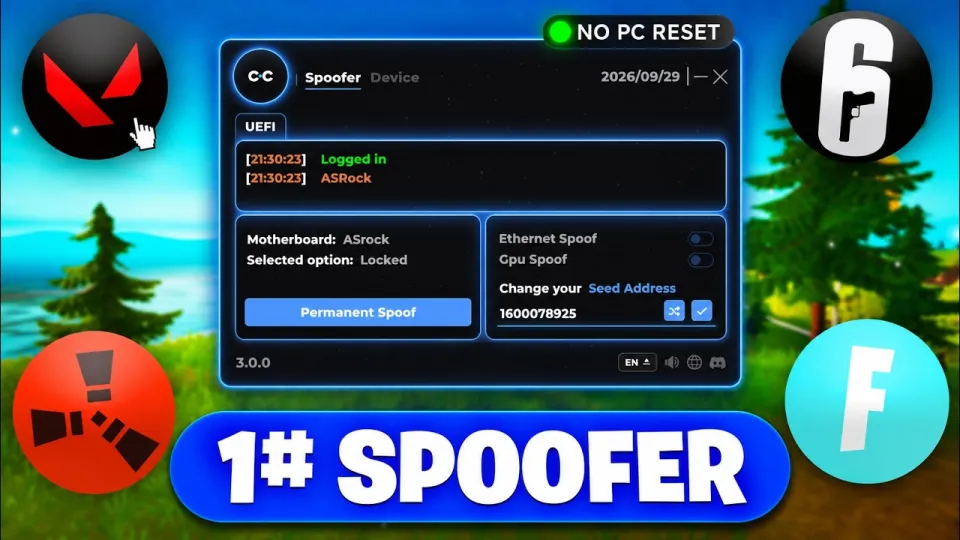
· based on the channel clixx
An HWID spoofer is a tool that changes the hardware identifiers a game or anti-cheat reads from your PC, so a hardware ban no longer points at your machine. The best-known options in 2026, including the CethCheats V3 build available at the official CethCheats website, work at kernel level and claim to rewrite serials permanently rather than patching a few registry keys. This breakdown covers how the process actually works, what it can and cannot fix, and where the real risks sit.
What an HWID spoofer actually changes
A hardware ban is not stored on your drive; it is a fingerprint assembled from components the operating system reports. Spoofers target the identifiers that anti-cheat clients collect and hash together:
- Motherboard and BIOS data – SMBIOS strings, board serial and UUID.
- Storage serials – the volume and disk identifiers Windows exposes.
- GPU identifiers – device ID and related adapter strings, which many cheap spoofers skip entirely.
- Network adapter MAC address – especially the Ethernet controller, another field frequently left untouched.
- TPM state – the Trusted Platform Module, which Vanguard and BattlEye increasingly use as a stable anchor.
A partial spoof leaves the untouched component as a matching point, which is why users report being re-banned hours after a "successful" spoof. CethCheats markets its V3 build specifically on covering all five areas, including Ethernet and GPU, plus a TPM bypass it says blocks detection from Valorant, Fortnite and Rust.
How the CethCheats V3 process runs
The vendor describes a one-click flow rather than manual registry editing or RAID tricks. In practice the sequence looks like this:
- Load the loader and open the spoofer tab.
- Select the Ethernet, GPU and seed options.
- Open the device tab and check for red serials, which flag identifiers still matching a known ban.
- Enable the permanent spoof and the motherboard option.
- Let the tool auto-restart the machine, then re-check the serials to confirm the new values stuck.
The permanent claim matters most: the vendor states the hardware IDs stay changed for life, including after a factory reset or a clean Windows install. That is a stronger promise than most free spoofers make, and it is the main reason the tool keeps coming up in discussion threads about fixing a hardware ban in Valorant, Rust, Fortnite, FiveM and Apex Legends.
What the hands-on test showed
The test machine was a PC hardware banned in Fortnite, Valorant and Rust, where every new account was flagged within minutes. Two earlier cheap spoofers had already failed on it: one did nothing at all, the other held for roughly six hours before the ban returned.
After the CethCheats run, the same rig launched Fortnite, Valorant, Rust and FiveM on fresh accounts without an immediate hardware flag. That is the realistic benchmark for any spoofer: surviving the first session and the following days, not just the login screen. The vendor's own framing is that the tool fixes permanent hardware bans, EAC, Vanguard and BattlEye hardware violations, instant connection bans on new accounts, "Hardware Banned" error messages, and shadow bans or server connection blocks.
Typical questions and doubts from users
Scepticism around spoofers is healthy, and the same concerns come up again and again.
"Will it really last, or will I be re-banned in a day?" Permanence depends on whether every identifier was rewritten. If a serial still matches, the ban returns quickly; the device tab's red-serial check exists precisely to catch that before you queue.
"Do I need technical knowledge?" The vendor's pitch is a one-click setup with no registry work, which is why the tool spreads by word of mouth rather than through tutorials.
"Is a free spoofer good enough?" Free tools usually cover one or two identifiers and are widely fingerprinted by anti-cheat vendors, which is the pattern behind the six-hour re-ban described above.
"Does it work on any game?" The claim is any title using EAC, BattlEye or Vanguard, but the outcome always depends on which identifiers that specific anti-cheat hashes.
Risks, cost and the honest caveats
Spoofing hardware IDs to evade a ban violates the terms of service of every major anti-cheat, and bans can extend to new accounts, new hardware or linked payment methods. Kernel-level tools also run with deep system access, so sourcing matters: a build from an unofficial mirror is a genuine malware risk, and the loader should only come from the vendor's own domain. Paid spoofers typically run on subscription or lifetime licences, and the vendor here advertises a discount code through its own channels. No spoofer is permanently undetected; anti-cheat updates target known spoofing methods continuously, so treat any "100% undetected" claim as marketing rather than a guarantee.
Where to get the tool
The only official source referenced in the breakdown is the vendor's site:
- CethCheats HWID Spoofer – https://cethcheats.cc
- The vendor's Discord community, linked from that same site, for support and licence questions.
Final verdict
CethCheats V3 is the most complete consumer spoofer covered here on paper: kernel-level injection, motherboard, GPU, Ethernet and TPM coverage, and a permanent spoof that survives a reinstall. The test on a machine banned in Fortnite, Valorant and Rust cleared the immediate hardware flag across all four titles tried, which is more than the cheaper alternatives managed. It is still a ToS violation with real account and malware risks, so weigh the cost against the value of the hardware. The full walkthrough, including the serial check and the discount code, comes from the clixx channel, and the tool itself is available at cethcheats.cc.
Key takeaways
- An HWID spoofer rewrites the hardware identifiers anti-cheat systems use to recognise a banned machine.
- CethCheats V3 claims a kernel-level spoof covering motherboard, GPU, Ethernet and TPM, with changes that survive a Windows reinstall.
- The tested machine was hardware banned in Fortnite, Valorant and Rust, with new accounts flagged within minutes.
- CethCheats lists more than 1,500 vouches and markets itself as the most trusted spoofer of 2026.
- Spoofing is a bannable offence under every major anti-cheat's terms of service, and detection is an ongoing arms race.
Source: HWID Spoofer – I Tested The One Everyone's Talking About (2026) · Markdown version
Questions & answers
Does an HWID spoofer actually work after a permanent hardware ban?
It can, if it rewrites every identifier the anti-cheat hashed. A ban is built from motherboard, storage, GPU, network and TPM data, so a tool that changes only some of them leaves a matching point and the ban returns quickly. In the tested case, a PC banned in Fortnite, Valorant and Rust ran fresh accounts after a full spoof, but that is one machine, not a guarantee.
How long does a spoofed hardware ID last?
Vendors of permanent spoofers claim the new IDs persist for the life of the hardware, including after a factory reset or clean Windows install. In practice, duration depends on whether the anti-cheat later flags the spoofing method itself. Cheap tools frequently fail within hours, which is the pattern users report most often.
Is a free HWID spoofer safe to use?
Free spoofers usually cover only one or two identifiers and are quickly fingerprinted by anti-cheat vendors, so re-bans are common. The bigger issue is sourcing: kernel-level tools need deep system access, and builds from unofficial mirrors are a real malware risk. Only download from the vendor's own domain.
Can spoofing get me banned again or cause other problems?
Yes. Evading a hardware ban breaches the terms of service of every major anti-cheat, and platforms can extend enforcement to new accounts, linked payment methods or replacement hardware. There is also no permanently undetected spoofer, since anti-cheat updates target known spoofing techniques continuously.